



global presence
Local support from a global company
Huvepharma® has a distribution network which covers more than 90 countries in 6 continents. Find your nearest Huvepharma® representative today.
Find your local contact


Although cereals make up the largest part of any feed formulation, most of the phosphorus (P) contribution comes from the protein sources. This is true for both free P, but also for P in the form of phytate (phytate-P) which represents 64-91% of total P.
In feed formulations, approximately 60-75% of phytate-P comes from the protein sources while the remainder comes from the cereal source (Table 1).
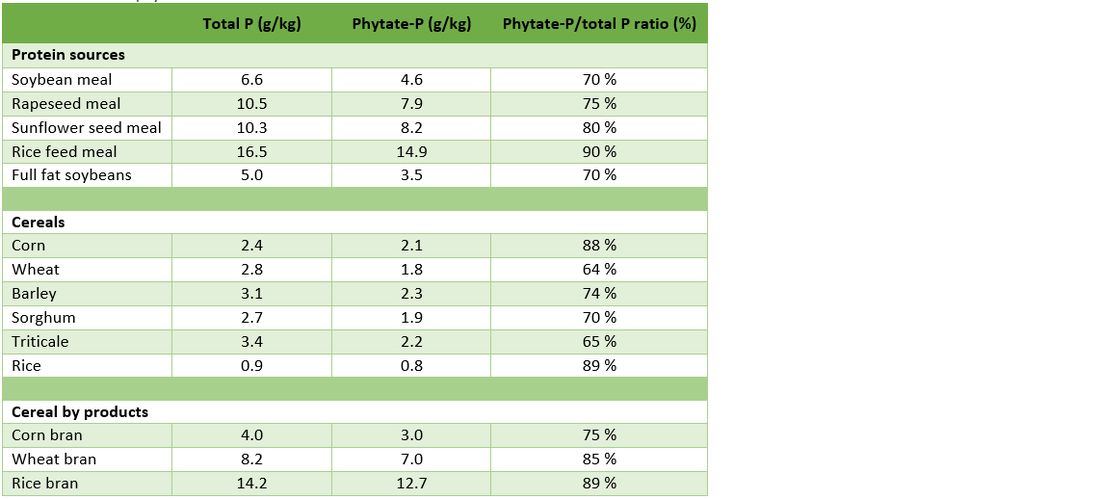
The determination of P matrix values for phytase enzymes are usually estimated using corn/soy diets. Therefore, if soybean meal is replaced with an alternative protein source like sunflower seed or rapeseed meal, and corn is replaced by wheat and barley, does this have an impact on the P matrix values of OptiPhos®?
A recent research trial carried out at Wageningen University investigated the effect of OptiPhos® at single, double or triple dose on the degradation of phytate-P from different protein sources and cereals using an in vitro digestibility model, mimicking the function of the stomach/gizzard and the small intestine. The results are shown in Table 2.
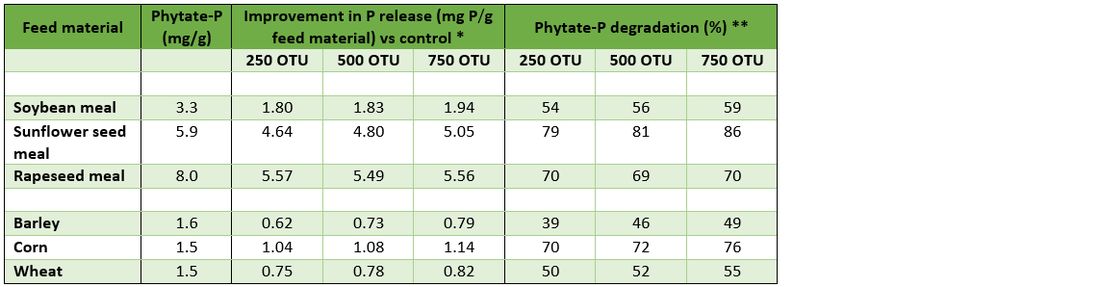
* Total P release by phytase at a certain FTU minus total P release in control diet
** Improvement in P release / total phytate-P in feed material
All doses were significantly different compared to the control (p < 0.05)
The trial concluded that:
Based on this data, OptiPhos® will release:
Conclusion

OptiPhos® Plus is the latest generation, most thermostable phytase on the market. OptiPhos® Plus has improved thermostability and shows robust and reliable matrix values.


The Huvepharma® distribution network covers 90 countries in 6 continents. Please select a country from the list below to see the products and services available in that region.
To view all products and services, select Global from the dropdown menu or click .
Huvepharma has a remarkable distribution network which covers 90 countries in 6 continents. To offer you the best services, we ask you to select your country.
Update your browser to view this website correctly. Update my browser now