



global presence
Local support from a global company
Huvepharma® has a distribution network which covers more than 90 countries in 6 continents. Find your nearest Huvepharma® representative today.
Find your local contact


Reducing the environmental impact of broiler production is talked about regularly, but what about other monogastric species such as swine? Pork is one of the most widely consumed meat products in the world and like most forms of intensive livestock farming, also has a notable environmental impact across several areas.
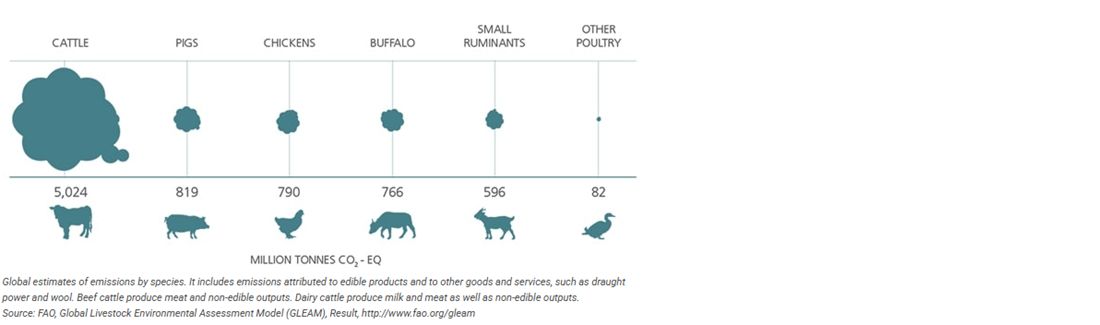
How does pork relate to other meat production animals?
Pork production is the second biggest producer of greenhouse gas emissions (GHGe; Figure 1).
GHGe from pork production include:
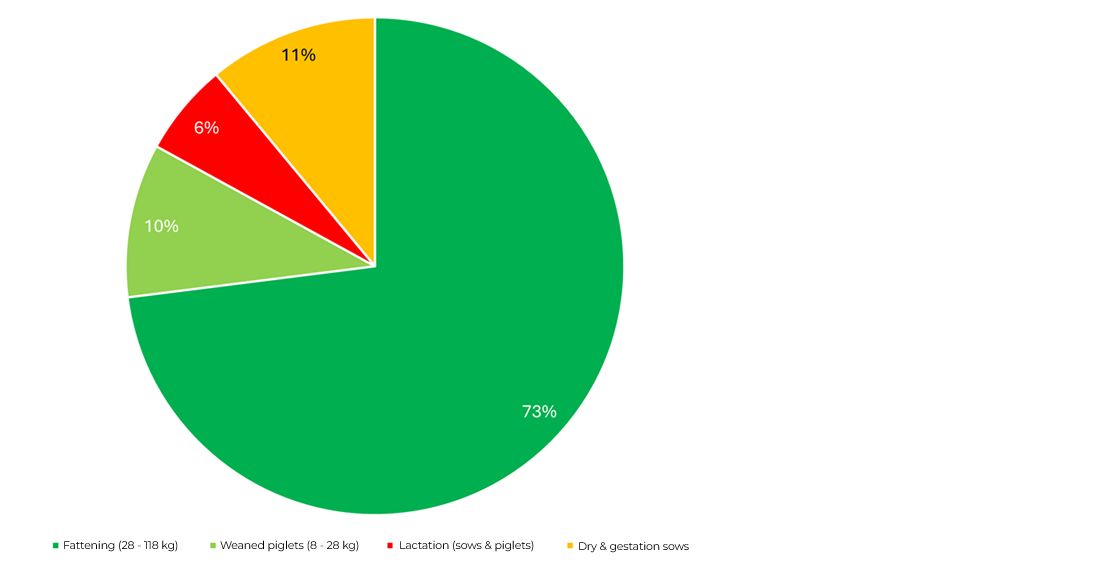
Figure 2 shows that ±70% of the total GHGe happens during the fattening phase of production (from a body weight of 25 kg up to a slaughter weight of 120 kg) while piglet production (sows and post weaning) only has a minor impact.
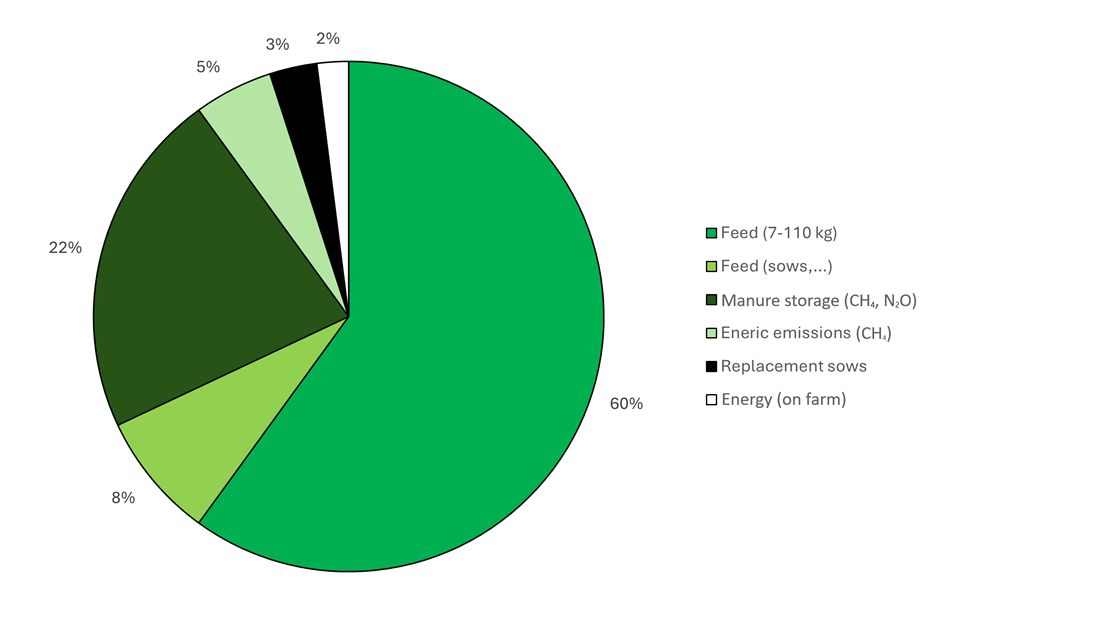
When we analyse the GHGe by its source, feed is the biggest contributor followed by emissions from manure (Figure 3). However, there can be huge differences in these figures in different geographical regions depending on production performance and other factors such as manure management. Manure that is stored in open lagoons has a higher level of emissions compared to biodigesters which have a much lower level of emissions.
When looking to improve the environmental impact of swine production, we need to consider:



The Huvepharma® distribution network covers 90 countries in 6 continents. Please select a country from the list below to see the products and services available in that region.
To view all products and services, select Global from the dropdown menu or click .
Huvepharma has a remarkable distribution network which covers 90 countries in 6 continents. To offer you the best services, we ask you to select your country.
Update your browser to view this website correctly. Update my browser now