





global presence
Local support from a global company
Huvepharma® has a distribution network which covers more than 90 countries in 6 continents. Find your nearest Huvepharma® representative today.
Find your local contact


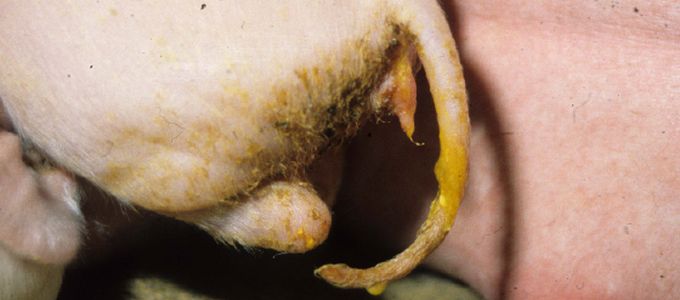
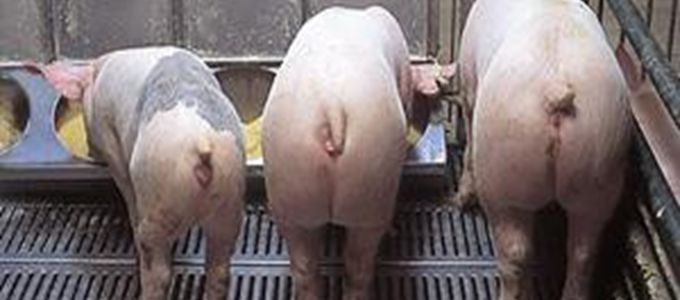
The prevalence and impact of worm infections are still often underestimated in daily pig management despite their tremendous effects on health and zootechnical parameters. The absence of specific clinical symptoms in the field is considered to be the main reason. A high prevalence of both Ascaris suum (large roundworms) and Oesophagostomum spp. (nodular worms) was demonstrated in a field study, underlining the importance of strategic deworming programs.
Eleven Danish indoor sow herds with unsatisfactory performance during lactation were selected for parasitological examination of faeces. Herds with poor management, low feed quality or animals suffering from PRRSv and influenza were not sampled. Inclusion criteria for sampling were:
Faecal samples were taken from five sows and five gilts per herd during the first 7 days after farrowing to perform egg per gram (EPG) counts. Prevalence (Table 1) and infection pressure (Table 2) were evaluated for both worm species.

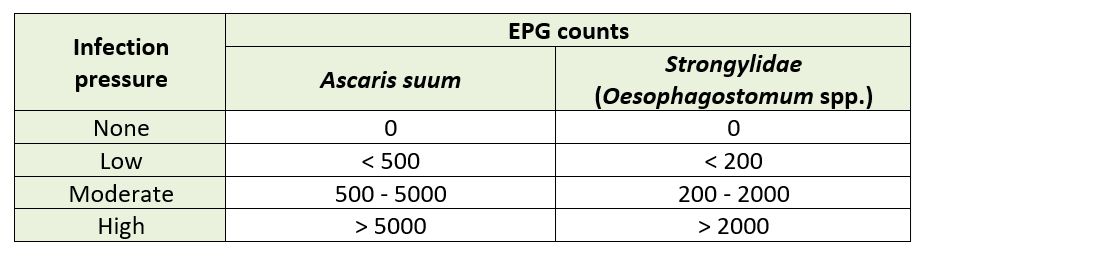
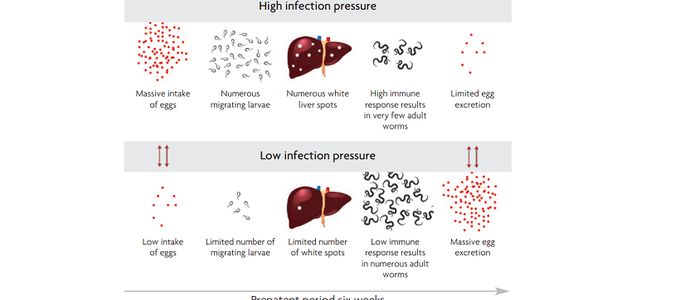
Table 2 shows the determination of worm infection pressure based on average EPG counts. This was used to determine the infection pressure at herd level (Figure 1).
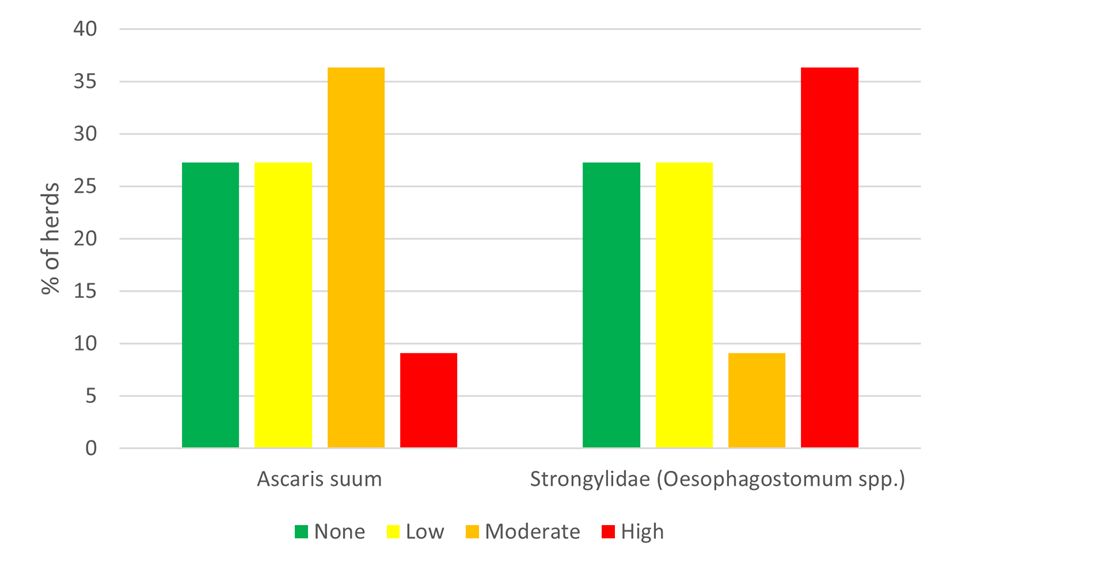
Ascaris suum and Strongylidae (Oesophagostomum spp.) worm infections were highly prevalent among herds. A significant difference in prevalence between sows and gilts was not demonstrated. A moderate to high infection pressure was detected in 45% of the herds for each of the worm species.

The Huvepharma® distribution network covers 90 countries in 6 continents. Please select a country from the list below to see the products and services available in that region.
To view all products and services, select Global from the dropdown menu or click .
Huvepharma has a remarkable distribution network which covers 90 countries in 6 continents. To offer you the best services, we ask you to select your country.
Update your browser to view this website correctly. Update my browser now